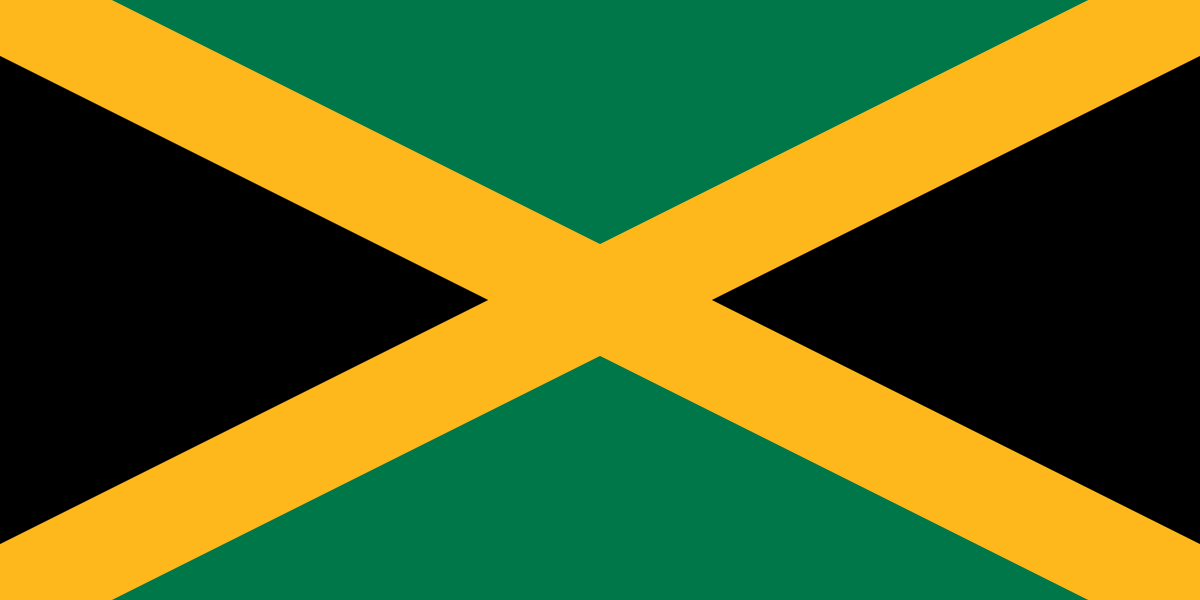
Field guide
Jamaica
JM
This page stitches together our stored feeds—expect warm, human-readable snippets rather than dry data tables.
Names & aliases
Quick facts
Need-to-know at a glance
Capital
Kingston
Currency
Jamaican dollar (JMD) · $
Languages
English, Jamaican Patois
Population
2,825,544
Area
10,991 km²
Calling code
+1876
Driving side
Left-hand
Pre-trip intel
Safety & entry
Advisories and border basics from our stored feeds.
Safety outlook
Jamaica - Level 3: Reconsider Travel
There were no changes to the advisory level or risk indicators. Advisory summary was updated to reflect changes to U.S. embassy operations and hurricane damage. Reconsider Travel to Jamaica due to Crime, Health, and Natural Disaster risks. Some areas have increased risk. Read the entire Travel Advisory. Advisory summary The U.S. Embassy in Kingston has resumed normal operations following Hurricane Melissa. Natural disaster Hurricane Melissa made landfall in Jamaica on October 28, 2025, causing widespread damage. Some airports, including the Norman Manley International Airport in Kingston have reopened for commercial flights. Other airports were severely damaged and remain closed or offer only limited operations. U.S. citizens are advised to contact their transportation providers for confirmation of availability. The Black River community was heavily damaged, as well. Consider rescheduling planned travel to Jamaica at this time. If you plan to travel, confirm availability with your transportation provider and at your destination before you leave. Some areas, such as Black River and Montego Bay, are in varying stages of recovery from Hurricane Melissa. Until repairs are complete, fewer hotels and transportation options may be available. Services may also be limited. Enroll in STEP to receive updates on conditions in Jamaica from the U.S. embassy. Previously issued STEP updates are available on the embassy website . Crime Violent crime in Jamaica has decreased since 2024, but it remains statistically high throughout the country. The homicide rate reported by the Government of Jamaica is among the highest in the Western Hemisphere. Tourist areas generally see lower rates of violent crime than other parts of the country. Armed robberies and sexual assaults are common. The U.S. Embassy routinely receives reports of sexual assaults, including from U.S. citizen tourists at resorts. U.S. citizens report slow or unsatisfactory response to serious criminal incidents. When arrests are made, cases are infrequently prosecuted to a final verdict and sentence. U.S. government employee travel restrictions U.S. government employees working in Jamaica are not allowed to: use public buses; or drive between cities at night. U.S. citizens in Jamaica are advised to take the same precautions. Health Basic and specialized medical care may not be available in many parts of Jamaica. This includes slower emergency service response times and less availability of care for illness or injury. Private hospitals require payment up front before admitting patients and may not have the ability to provide specialized care. Ambulance services are not always staffed with EMTs and are not always readily available, especially in rural areas. U.S. citizens should bring extra prescription medication as common medications, such as insulin, can be difficult to obtain. U.S. Medicare/Medicaid does not apply overseas. Most hospitals and doctors overseas do not accept U.S. health insurance. Air ambulance service to the United States can range from $30,000-$50,000. We highly recommend that you buy insurance before you travel. Check with your travel insurance provider about evacuation assistance, medical insurance, and trip cancellation coverage. The Department of State does not pay medical bills. Level 4 - Do Not Travel - High crime areas Do Not Travel to high crime areas due to risk of crime. U.S. government employee travel restrictions U.S. government employees working in Jamaica are not allowed to travel to the below high risk areas. U.S. citizens in Jamaica are advised to take the same precautions. Do not travel to these areas for any reason. St. Ann’s Parish - Steer Town and the Buckfield neighborhood near Ocho Rios. St. Catherine’s Parish - Spanish Town, Central Village, areas within Portmore, including: Naggo Head, New Land, Old Braeton, Portmore Lane, Gregory Park, and Waterford. Clarendon Parish - all of Clarendon Parish, except passing through Clarendon Parish using the T1 and A2 highways. St. Elizabeth’s Parish - Vineyard District Community, between the communities of Salt Spring and Burnt Savanna, St. Elizabeth. Hanover Parish - Logwood and Orange Bay. St. James Parish/Montego Bay - Inland side of the A1 highway and The Queen’s Drive from San San to Harmony Beach Park. Kingston and St. Andrew Parish - Cassava Piece, Duhaney Park, Grants Pen, Standpipe, Swallowfield, Elleston Flats, August Town, and downtown Kingston, defined as between Mountain View Avenue and Hagley Park Road, and south of Half Way Tree and Old Hope Roads. Downtown Kingston includes Arnett Gardens, Cockburn Gardens, Denham Town, Olympic Gardens, Seaview Gardens, Trench Town, and Tivoli Gardens. Manchester Parish - Green Vale and Gray Ground neighborhoods of Mandeville. St. Thomas Parish - Black Lane neighborhood in Seaforth, Grands Penn, Church Corner neighborhood near Yallahs, Town of Yallahs, except when driving through on the main highway. Trelawny Parish - Clarks Town. Westmoreland Parish - Russia community in Savanna-la-Mar (The Southeastern quadrant of Savannah la Mar east of Darling Street and south of the A2 highway/Barracks Road), Morgan Bay, Kings Valley, The Whitehall, Bethel Town, and Red Ground neighborhoods of Negril. Visit our website for Travel to High-Risk Areas . If you decide to travel to Jamaica: Do not attempt to bring firearms or ammunition. This includes stray rounds, shells, or empty casings. The penalties for carrying firearms or ammunition, even by mistake, are severe, and can include long prison sentences. Have a plan to depart in an emergency that does not depend on U.S. government help. Review our information on Crisis and Evacuations . Avoid walking or driving at night. Avoid public buses. Avoid remote places. Do not physically resist any robbery attempt. Be aware of your surroundings and keep a low profile. Review our information on Travel to High-Risk Areas , Crime Abroad , and for Victims of Crime . Enroll in the Smart Traveler Enrollment Program (STEP) to get important updates and alerts from the U.S. embassy or consulate. Enrolling helps the U.S. embassy or consulate contact you or your emergency contact in an emergency. Review the Country Security Report for Jamaica . Visit the Centers for Disease Control and Prevention (CDC) website for the latest Travel Health Information for Jamaica. Whether you’re a first time or frequent traveler, use the International Travel Checklist . We highly recommend that you buy travel insurance before you travel. Check with your travel insurance provider about evacuation assistance, medical insurance, and trip cancelation coverage. (Updated November 3, 2025 at 12:00 AM)
- Consider rescheduling planned travel to Jamaica at this time. If you plan to travel, confirm availability with your transportation provider and at your destination before you leave.
- Some areas, such as Black River and Montego Bay, are in varying stages of recovery from Hurricane Melissa. Until repairs are complete, fewer hotels and transportation options may be available. Services may also be limited.
- Tourist areas generally see lower rates of violent crime than other parts of the country.
- Armed robberies and sexual assaults are common.
- The U.S. Embassy routinely receives reports of sexual assaults, including from U.S. citizen tourists at resorts.
- U.S. citizens report slow or unsatisfactory response to serious criminal incidents.
Entry & Docs
Visas, customs & paperwork
Holders of Taiwanese (Republic of China) passports will require an extra affidavit of identity issued by Jamaican authorities in order to apply for Jamaican visa on arrival. 2019-11-18 Except for Canada, citizens of Commonwealth countries require a passport valid for at least 6 months, a return ticket, and sufficient funds. Canadian citizens require a passport or a birth certificate and ID card. No visa is required except for citizens of Sri Lanka, Nigeria, Pakistan, and Sierra Leone. Citizens of the USA, including those visiting by cruise ship, require a passport, but no visa is required for a stay of up to six months. Passports can have expired, as long as they expired less than a year ago. German citizens can stay for 90 days without a visa. Similar terms probably apply to other countries in the Schengen area. Japanese citizens can stay for 30 days without a visa. Since 27 May 2014, Chinese citizens (including Macau) can also stay for 30 days without a visa. However, it's for tourist purposes only; to travel to Jamaica for any other reason, they still need a visa. Most other nationalities need visas.
- Except for Canada, citizens of Commonwealth countries require a passport valid for at least 6 months, a return ticket, and sufficient funds. Canadian citizens require a passport or a birth certificate and ID card. No visa is required except for citizens of Sri Lanka, Nigeria, Pakistan, and Sierra Leone.
- Citizens of the USA, including those visiting by cruise ship, require a passport, but no visa is required for a stay of up to six months. Passports can have expired, as long as they expired less than a year ago.
- German citizens can stay for 90 days without a visa. Similar terms probably apply to other countries in the Schengen area.
- Japanese citizens can stay for 30 days without a visa.
- Since 27 May 2014, Chinese citizens (including Macau) can also stay for 30 days without a visa. However, it's for tourist purposes only; to travel to Jamaica for any other reason, they still need a visa.
- Most other nationalities need visas.
On the ground
Getting around & connectivity
Practical notes from Wikivoyage sections.
Local wisdom
Etiquette, tipping & staying well
Etiquette & respect
Jamaicans are known for their warmth, laid-back attitude to life, and generosity. It is customary to greet people, including complete strangers, wherever you may go. A simple Hello or Good morning would do just fine. Religion is a huge deal to many Jamaicans. A church can be found in every nook and corner of the country, and Jamaicans love to talk about it. Criticising religion, speaking about it from an agnostic point of view, or stating that you do not believe in God will most likely be met with bewildered looks. Jamaicans tend to value their privacy and they generally do not invite people they do not know well to their homes. If …
Etiquette & respect
Jamaicans are known for their warmth, laid-back attitude to life, and generosity. It is customary to greet people, including complete strangers, wherever you may go. A simple Hello or Good morning would do just fine. Religion is a huge deal to many Jamaicans. A church can be found in every nook and corner of the country, and Jamaicans love to talk about it. Criticising religion, speaking about it from an agnostic point of view, or stating that you do not believe in God will most likely be met with bewildered looks. Jamaicans tend to value their privacy and they generally do not invite people they do not know well to their homes. If …
- Jamaicans are known for their warmth, laid-back attitude to life, and generosity. It is customary to greet people, including complete strangers, wherever you may go. A simple Hello or Good morning would do just fine.
- Religion is a huge deal to many Jamaicans. A church can be found in every nook and corner of the country, and Jamaicans love to talk about it. Criticising religion, speaking about it from an agnostic point of view, or stating that you do not believe in God will most likely be met with bewildered looks.
- Jamaicans tend to value their privacy and they generally do not invite people they do not know well to their homes. If you have been invited to a Jamaican home, remove your shoes before entering.
- It must also be noted that any person of East Asian descent will almost always be called "Missa/Miss Chin"; this is a common stereotype based on prominent locals bearing the surname. This should not be taken seriously, as it is a form of endearment existing among locals. Caucasians will also be met by stares from numerous people in the less touristy areas. But don't worry. Just smile!
- Although most (90-92%) Jamaicans are Afro-Jamaicans, Jamaica is a diverse country and there are long-established communities of Europeans, Chinese, and Indians. It is considered rude to express doubt if someone is truly Jamaican just because they are not black.
- Show respect to elders and authority figures. Use the terms "sir" and "ma'am" with them and behave appropriately in front of them.
Tipping guidance
No summary available.
Needs review
Tipping guidance
No summary available.
No bullet notes stored.
Health & wellness
Medical facilities on the island are not always up to par with European or American health care standards. Falling ill can sometimes result in major medical fees. Therefore, buy travel insurance, as this will ensure peace of mind in emergency situations. The tap water is generally good and safe to drink. All piped water in Jamaica is treated to international standards, and will be of the same quality you could expect to find in North America or Europe. Water service in rural areas can sometimes go out for several hours at a time. People in rural areas have their own water tanks, which catch water when it rains, so be ready to draw from a tank instead of turning a pipe. Water from these sources should be boiled before being consumed. Bottled water such as Wata (a local brand), Aquafina and Deer Park are widely available. Be cautious of the water quality at public swimming beaches, such as "Walter Fletcher Beach" in Montego Bay, which some locals call "dump-up beach", situated near the north gully. Large amounts of solid and human waste flush down the gully during storm events. The water flowing down Dunn's River Falls has also been said to contain high amounts of coliform bacteria, indicating faecal contamination. The country's adult HIV/AIDS prevalence is at nearly 1.6%. This is more than 2½ times that of the USA and 16 times higher than the UK. So while Jamaica has a relatively low infection rate compared to some other developing nations, you would be wise to abstain or practice safe sex and avoid risky intravenous drug use. A 2006 malaria outbreak in Kingston was identified and controlled and Jamaica has now returned to the malaria-free status it had for decades before this localised and isolated incident. As in much of the Caribbean, dengue fever is an increasing risk. This normally manifests as a flu-like illness with severe joint and muscle pain, vomiting and a rash which may be complicated by haemorrhagic shock. It's transmitted by Aedes mosquitoes, which bite in the daytime and love densely populated areas like Kingston, though they also inhabit rural environments. No vaccine or other prophylactics are available so use insect repellent if you can not stand to be covered head to toe in the tropical humid heat.
Health & wellness
Medical facilities on the island are not always up to par with European or American health care standards. Falling ill can sometimes result in major medical fees. Therefore, buy travel insurance, as this will ensure peace of mind in emergency situations. The tap water is generally good and safe to drink. All piped water in Jamaica is treated to international standards, and will be of the same quality you could expect to find in North America or Europe. Water service in rural areas can sometimes go out for several hours at a time. People in rural areas have their own water tanks, which catch water when it rains, so be ready to draw from a tank instead of turning a pipe. Water from these sources should be boiled before being consumed. Bottled water such as Wata (a local brand), Aquafina and Deer Park are widely available. Be cautious of the water quality at public swimming beaches, such as "Walter Fletcher Beach" in Montego Bay, which some locals call "dump-up beach", situated near the north gully. Large amounts of solid and human waste flush down the gully during storm events. The water flowing down Dunn's River Falls has also been said to contain high amounts of coliform bacteria, indicating faecal contamination. The country's adult HIV/AIDS prevalence is at nearly 1.6%. This is more than 2½ times that of the USA and 16 times higher than the UK. So while Jamaica has a relatively low infection rate compared to some other developing nations, you would be wise to abstain or practice safe sex and avoid risky intravenous drug use. A 2006 malaria outbreak in Kingston was identified and controlled and Jamaica has now returned to the malaria-free status it had for decades before this localised and isolated incident. As in much of the Caribbean, dengue fever is an increasing risk. This normally manifests as a flu-like illness with severe joint and muscle pain, vomiting and a rash which may be complicated by haemorrhagic shock. It's transmitted by Aedes mosquitoes, which bite in the daytime and love densely populated areas like Kingston, though they also inhabit rural environments. No vaccine or other prophylactics are available so use insect repellent if you can not stand to be covered head to toe in the tropical humid heat.
- Medical facilities on the island are not always up to par with European or American health care standards. Falling ill can sometimes result in major medical fees. Therefore, buy travel insurance, as this will ensure peace of mind in emergency situations.
- The tap water is generally good and safe to drink. All piped water in Jamaica is treated to international standards, and will be of the same quality you could expect to find in North America or Europe. Water service in rural areas can sometimes go out for several hours at a time. People in rural areas have their own water tanks, which catch water when it rains, so be ready to draw from a tank instead of turning a pipe. Water from these sources should be boiled before being consumed. Bottled water such as Wata (a local brand), Aquafina and Deer Park are widely available.
- Be cautious of the water quality at public swimming beaches, such as "Walter Fletcher Beach" in Montego Bay, which some locals call "dump-up beach", situated near the north gully. Large amounts of solid and human waste flush down the gully during storm events. The water flowing down Dunn's River Falls has also been said to contain high amounts of coliform bacteria, indicating faecal contamination.
- The country's adult HIV/AIDS prevalence is at nearly 1.6%. This is more than 2½ times that of the USA and 16 times higher than the UK. So while Jamaica has a relatively low infection rate compared to some other developing nations, you would be wise to abstain or practice safe sex and avoid risky intravenous drug use.
- A 2006 malaria outbreak in Kingston was identified and controlled and Jamaica has now returned to the malaria-free status it had for decades before this localised and isolated incident.
- As in much of the Caribbean, dengue fever is an increasing risk. This normally manifests as a flu-like illness with severe joint and muscle pain, vomiting and a rash which may be complicated by haemorrhagic shock. It's transmitted by Aedes mosquitoes, which bite in the daytime and love densely populated areas like Kingston, though they also inhabit rural environments. No vaccine or other prophylactics are available so use insect repellent if you can not stand to be covered head to toe in the tropical humid heat.
Scams & street smarts
Beware of rapists at resorts, [https://www.usatoday.com/story/travel/2018/10/30/jamaica-resorts-tripadvisor-sexual-assault/1816675002/ as advised by travel advisories.] Jamaica has the 2nd highest murder rate in the world. As in any other country, should any emergency situation arise, after calling 119 for the police or 110 for the fire brigade or ambulance, you might want to contact your government's embassy or consulate. Governments usually advise travellers staying in Jamaica for an extended period of time to notify their embassy or consulate so they can be contacted in the case of emergency. If in need of police, dial 119, just don't expect them to show up on the spot. Drugs and alcohol are prevalent. Armed men may pose a threat to women in some areas. Inner-city parts of the island such as Spanish Town and some neighbourhoods in Kingston (Trench Town, etc.) should be avoided even during the day. However, those who are interested in visiting the Culture Yard in Trench Town should be safe if they go during daylight hours and with a hired local guide, which should not be terribly expensive. Be sure to ask for advice from locals before going, and avoid going there around elections, when violence flares up. September, October, and November have fewer tourists as this is hurricane season. As a result, the police are encouraged to take their vacation during this time. This reduction in the police force can cause areas like Montego Bay's hip strip to be less safe than they normally are.
Scams & street smarts
Beware of rapists at resorts, [https://www.usatoday.com/story/travel/2018/10/30/jamaica-resorts-tripadvisor-sexual-assault/1816675002/ as advised by travel advisories.] Jamaica has the 2nd highest murder rate in the world. As in any other country, should any emergency situation arise, after calling 119 for the police or 110 for the fire brigade or ambulance, you might want to contact your government's embassy or consulate. Governments usually advise travellers staying in Jamaica for an extended period of time to notify their embassy or consulate so they can be contacted in the case of emergency. If in need of police, dial 119, just don't expect them to show up on the spot. Drugs and alcohol are prevalent. Armed men may pose a threat to women in some areas. Inner-city parts of the island such as Spanish Town and some neighbourhoods in Kingston (Trench Town, etc.) should be avoided even during the day. However, those who are interested in visiting the Culture Yard in Trench Town should be safe if they go during daylight hours and with a hired local guide, which should not be terribly expensive. Be sure to ask for advice from locals before going, and avoid going there around elections, when violence flares up. September, October, and November have fewer tourists as this is hurricane season. As a result, the police are encouraged to take their vacation during this time. This reduction in the police force can cause areas like Montego Bay's hip strip to be less safe than they normally are.
- Beware of rapists at resorts, [https://www.usatoday.com/story/travel/2018/10/30/jamaica-resorts-tripadvisor-sexual-assault/1816675002/ as advised by travel advisories.]
- Jamaica has the 2nd highest murder rate in the world. As in any other country, should any emergency situation arise, after calling 119 for the police or 110 for the fire brigade or ambulance, you might want to contact your government's embassy or consulate. Governments usually advise travellers staying in Jamaica for an extended period of time to notify their embassy or consulate so they can be contacted in the case of emergency.
- If in need of police, dial 119, just don't expect them to show up on the spot.
- Drugs and alcohol are prevalent. Armed men may pose a threat to women in some areas. Inner-city parts of the island such as Spanish Town and some neighbourhoods in Kingston (Trench Town, etc.) should be avoided even during the day. However, those who are interested in visiting the Culture Yard in Trench Town should be safe if they go during daylight hours and with a hired local guide, which should not be terribly expensive. Be sure to ask for advice from locals before going, and avoid going there around elections, when violence flares up.
- September, October, and November have fewer tourists as this is hurricane season. As a result, the police are encouraged to take their vacation during this time. This reduction in the police force can cause areas like Montego Bay's hip strip to be less safe than they normally are.
Tempo & rhythm
Climate & timezones
Ground truth from Open-Meteo, REST Countries, and webcams.
Climate (Capital proxy)
No best-month highlights stored.
Jan
—
—
Feb
—
—
Mar
—
—
Apr
—
—
May
—
—
Jun
—
—
Jul
—
—
Aug
—
—
Sep
—
—
Oct
—
—
Nov
—
—
Dec
—
—
Timezones
UTC offsets
Webcam IANA zones
- America/Jamaica3 cams
Practicalities
Money & essentials
Money & costs
GDP per capita: $7,753.801 · 2024
GDP (PPP): $12,890.266 · 2024
Inflation: 5.4% · 2024
Currency: Jamaican dollar (JMD) · $
Power & plugs
Highlights
Top places to explore
No places stored yet.
Cams
Cams in this country
Live feeds indexed across our network.
Total webcams
3
Categories
CITY: 2 · HARBOR: 1
Top cities
Plan
Plan your trip
Curated partners for flights, beds, insurance, and more.
Flights via Skyscanner
Hotels via Booking.com
Travel Insurance via SafetyWing
Guided Tours via Viator
International eSIM via Airalo
Links are templates; confirm final tracking codes before launch.
Sources
Attribution & provenance
Every wiki block is pulled from these stored responses.
REST Countries
December 21, 2025 at 10:30 PM · HTTP 200
OK
REST Countries
December 21, 2025 at 10:30 PM · HTTP 200
Source ID: restCountries
Visit sourceU.S. Department of State
December 21, 2025 at 10:30 PM · HTTP 200
OK
U.S. Department of State
December 21, 2025 at 10:30 PM · HTTP 200
Source ID: stateDeptAdvisory
Visit sourceOpen-Meteo Climate
December 21, 2025 at 10:30 PM · HTTP 429
Error
Open-Meteo Climate
December 21, 2025 at 10:30 PM · HTTP 429
Source ID: openMeteoClimate
Visit sourceWikivoyage
December 21, 2025 at 10:30 PM · HTTP 200
OK
Wikivoyage
December 21, 2025 at 10:30 PM · HTTP 200
Source ID: wikivoyage
Visit sourceWorld Bank GDP per capita
December 21, 2025 at 10:30 PM · HTTP 200
OK
World Bank GDP per capita
December 21, 2025 at 10:30 PM · HTTP 200
Source ID: worldBank:NY.GDP.PCAP.CD
Visit sourceWorld Bank GDP PPP per capita
December 21, 2025 at 10:30 PM · HTTP 200
OK
World Bank GDP PPP per capita
December 21, 2025 at 10:30 PM · HTTP 200
Source ID: worldBank:NY.GDP.PCAP.PP.CD
Visit sourceWorld Bank Inflation (CPI)
December 21, 2025 at 10:30 PM · HTTP 200
OK
World Bank Inflation (CPI)
December 21, 2025 at 10:30 PM · HTTP 200
Source ID: worldBank:FP.CPI.TOTL.ZG
Visit sourceWorldStandards (plugs)
December 21, 2025 at 10:30 PM · HTTP 200
OK
WorldStandards (plugs)
December 21, 2025 at 10:30 PM · HTTP 200
Source ID: powerPlugs
Visit sourceSite provides only human-readable tables; linking instead of parsing.
Webcam DB aggregates
December 21, 2025 at 10:30 PM
OK
Webcam DB aggregates
December 21, 2025 at 10:30 PM
Source ID: webcamDb
Visit sourceAffiliate hub config
December 21, 2025 at 10:30 PM
OK
Affiliate hub config
December 21, 2025 at 10:30 PM
Source ID: affiliateHub
Visit sourceContains information from Wikivoyage, available under CC BY-SA 3.0.